One of the greatest necessities in every house is a water heater. We use it in hot showers, to clean dishes and laundry, and more. It is stressful and inconvenient when it fails to work well.
This guide will tell you how to diagnose the most common water heater issues, the safe and basic checks that you can go through, and when you should call a professional plumber or technician. Regardless of whether you have a gas or electric water heater, there are a few things that you need to know to help you save time, money, and frustration.
Understanding the Two Main Types of Water Heaters
It is necessary to know what type of water heater you have before troubleshooting.
Gas Water Heaters
These utilize natural gas/propane to heat water. They contain a burner, pilot light (or electronic ignition), and exhaust gases vent.
Electric Water Heaters
These use electricity and heating components within the tank. They are typical in apartments and suburban houses.
Important Safety Note: Gas and electrical systems can be dangerous. Major repairs should always be handled by a licensed professional.
Common Signs Your Water Heater Needs Repair
Water heaters normally provide alerts prior to total breakdown.
No Hot Water
The most noticeable indication is having no hot water; it may be brought about by power problems, heating elements, or gas supply problems.
Water Is Not Hot Enough
If your water gets cold too fast or it does not get hot at all, the heater is not functioning properly.
Strange Noises
Hissing or cracking sounds can be a sign of sedimentation within the tank.
Leaking Water
Water pooling around the heater may be an indicator of loose connections or damage to the inside of the tank.
Rusty or Discolored Water
This may either be corrosion in the inside of the tank or a corroded anode rod.
Safety Steps Before Inspecting a Water Heater
Safety is the first thing to ensure before you check anything.
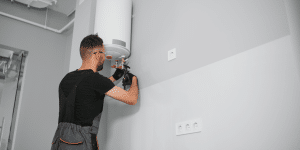
Turn Off Power or Gas
- For electric heaters, switch the circuit breaker off.
- For gas heaters, make sure the gas control knob is turned off.
Let the Water Cool
Warm or hot water may result in severe burns. Allow the heater to cool down and then check.
Keep the Area Clear
- Make sure the surrounding area of the heater is clean
- If you ever smell gas you should leave the house right away, and call your gas company or 911
Troubleshooting Common Water Heater Problems
These are advanced, non-dangerous checks which help you to know the problem- not total repair directions.
Inspecting the Power or Gas Supply
- Be sure that the breaker has not tripped (electric models).
- Ensure that supply of gas is on (gas models).
There are cases when the issue is as basic as a power outage.
Flight Deck Problems (Gas Heaters)
When the pilot light is flickering, then it may be associated with ventilation or a broken part. The instructions of relighting are dependent on the model and must always be adhered to per the label of the manufacturer.
If it does not keep burning, enlist the services of a licensed technician.
Temperature Settings
Most water heaters have a heat setting that is too low. It is optimal to have it set at 120 degrees Fahrenheit in households, as this temperature is comfortable and safe.
Do not switch it higher because it raises the risk of burning, as well as the cost of energy.
Sediment Buildup
With time, the minerals present in the water supply are deposited at the bottom of the tank. This makes it inefficient and noisy.
A professional plumber will be able to flush the tank safely to get back to its proper performance.
When to Repair vs. Replace a Water Heater
Not all problems are worth fixing.
Age of the Water Heater
- The life of most water tank heaters is 8 to 12 years.
- Replacement can prove to be more affordable especially when yours is towards the end of lifespan.
Frequent Repairs
If repairs are frequent, replacement is normally cost effective in the long run.
Tank Leaks
Any leakage of the tank itself normally implies the inability to repair the unit.
Maintenance Tips to Prevent Future Problems
Having your water heater serviced on a regular basis will prolong its life.
Annual Professional Inspection
An annual check from a licensed plumber can reveal minor problems to be repaired that can save money over time.
Keep the Area Clean
Dust and debris may interfere with the performance, particularly in the case of gas heaters.
Watch for Early Warning Signs
Unusual sounds, changes in water color, or temperature problems should be solved as soon as possible.
When to Call a Professional Plumber
Several repairs on water heaters need permits and licensed individuals.
Call a professional if:
- The heater uses gas
- Power is involved in electrical components
- The tank is leaking
- You do not know or feel like doing any inspection
It will save you time and money by hiring a licensed plumber, who will comply with the local building code and maintain warranties.
Cost of Water Heater Repair
Depending on the place and problem, repair costs will differ:
Minor repairs: $150 – $300
Significant part replacement: $300 – $700
Full replacement: $1,000 – $3,500 (inclusive of labor)
It is usual and advisable to obtain several quotes.