One of the greatest appliances in any home is a water heater. It supplies hot water to have a shower, cook, clean, and do other day-to-day activities. However, once it begins to leak, even in a small amount, it should not be overlooked. The question many homeowners ask themselves is: Can a leaking water heater be dangerous? The short answer is yes. A leaking water heater may result in property damage, mold, and electrical risks, and even a possible explosion if it’s a gas-powered heater.
This guide shows the reasons why leakages occur, risks associated with such leakages, actions to take at the moment, and prevention of future issues.
Why Water Heaters Leak
It’s good to know why leaks occur in the first place before knowing the dangers.
The most common reasons are:
Faulty Temperature and Pressure Relief Valve
- T&P valve is opened when the pressure or temperature in the tank becomes excessively high
- When it is leaking it might be malfunctioning–or the tank might be overheating
Loose or Damaged Drain Valve
The drain valve at the bottom of the water heater may loosen with time or crack.
Corrosion Inside the Tank
- Water heater tanks can corrode with age
- Leaks start as soon as rust penetrates the metal
This is normally an indication that the water heater is about to reach its expiration date.
High Water Pressure
High pressure in the house overworks the tank and can create leaks around the fittings or connections.
Faulty Connections or Fittings
Hot and cold water supply lines may have small leakages that may deteriorate easily unless managed.
Is a Leaking Water Heater Dangerous?
Yes. A drip of water can cause severe danger.
A homeowner should know the following:
Risk of Water Damage
Water leaks may begin minor but develop rapidly, resulting in:
- Broken floors, walls, and base board.
- Carpets and furniture damage
- Mold growth within 24 to 48 hours
- Severe cases of structural damage
Leaks around completed basements or hardwood floors would cost thousands of dollars to repair.
Electrical Hazards
If you have an electric water heater, water may leak on wires or electric parts.
This may lead to:
- Short circuits
- Electrical shocks
- Potential fire hazards
To be on the safe side, do not handle a electric water heater when wet. Switch off power on the circuit breaker.
Gas Leak and Explosion Risks
Gas water heaters are also dangerous if there are leaks:
- Water may destroy the burner assembly
- The tank may become weak due to corrosion leading to pressure problems
- A defective T&P valve in a gas heater may result unsafe pressure
Water heater explosions are not very common but can be devastating.
Most incidents are caused by:
- High pressure
- Failed T&P valve
- Unaddressed overheating
Mold and Mildew Growth
Leaks that are not noticed at all provide good conditions for mold growth.
Mold exposure can cause:
- Allergies
- Respiratory issues
- Asthma flare-ups
- Acidic smells that are difficult to eliminate
Slip and Fall Hazards
Standing water around your heating system can cause slippery floors; this may be dangerous to both adults and children.
How To Repair a Leaking Water Heater
If there is a leak, time is of the essence.
Here’s what to do, step-by-step:
Turn Off the Power
For electric heaters:
- Go to the electrical panel of your home
- Switch “Water Heater” to OFF
For gas heaters:
- Switch the gas control knob to the OFF position
Shut Off the Water Supply
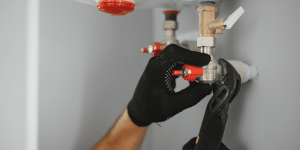
- Find the cold water shutoff valve over the heater
- Wind it clockwise to prevent incoming water in the tank
Identify the Source of the Leak
Check:
- T&P valve
- Drain valve
- Supply lines
- Bottom of the tank.
This will aid in establishing whether the heater can be fixed or should be replaced.
Clean Up Standing Water
Wipe with towels or a wet/ dry vacuum to avoid further damage.
Call a Licensed Plumber
A professional can:
- Diagnose the cause
- Repair minor issues
- Find out whether it needs to be replaced
Do Not Attempt Major Repairs Yourself
Water heaters are associated with pressure, electricity, and in some cases, gas. DIY errors are common and hazardous.
When You Should Replace a Leaking Water Heater
Not all leaks can be repaired; replacement is usually required when:
The Tank Is Corroded
When metal is corroded, the tank is not repairable.
The Unit Is Over 8-12 Years Old
The typical lifespan of water heaters installed in most American homes is 10 years.
Older units are more prone to leakage, and they are also less efficient.
Water Pressure or Temperature Issues Keep Occurring
Any recurrent pressure problems reveal that there is more trouble within the tank.
Bottom of the Tank Leaks
This normally implies that the inner lining is rotted.
If you experience any of the above, it is less expensive and a better idea to replace the unit than to make continuous repairs.
Preventing Water Heater Leaks
Some basic maintenance can be used to greatly minimize the chances of leaks.
Check the T&P Valve Annually
Most plumbers suggest that this valve be tested every year to make sure that it opens effectively.
Flush the Tank Yearly
Flushing eliminates the sediment which may lead to:
- Overheating
- Corrosion
- Pressure buildup
Check Connections and Fittings
Check pipes and valves to see if they are moist, rusted, or have mineral deposits.
Install a Water Heater Pan
A drain pan will help prevent significant damage if your heater is located on a second floor or a finished area.
Reduce Water Pressure
When the water pressure in your house is regularly more than 80 PSI, it is worth considering the installation of pressure-reducing valve (PRV).
Change Anode Rod Every Few Years
Corrosion inside the tank can be avoided by this inexpensive element.
When a Leak is a Major Emergency
There are some cases where emergency measures are needed, and things that should not be ignored:
- Fast, continuous leaking
- Water pooling rapidly
- Noises that are not normal or steam in tank
- Rust-colored water
- The odor of gas (leave immediately and phone your gas company)